Backwards backsides and the ABC’s editing.

The Australian Navy recently celebrated the launch of their $2 billion warship the HMAS Supply in April , a new Auxiliary Oiler Replenishment ship designed to carry fuel, equipment and spare parts to provide support for deployed naval forces operating far from port.

While the launch celebrations included much of the traditional fanfare, what makes this particular launch unique was the decision to employ dance troupe 101 Doll Squadron as one of the unofficial acts.

The Sydney-based dance troupe specialises in dancehall and afrobeats, describing themselves as a “squadron of dancehall women facilitating a movement to unite and collaborate unique projects…”

Although they were not a part of the official celebration, news of the dancers went viral – with the ABC releasing a particularly controversial video report that captured the public interest more than it was likely intended.

In the widely circulated video, the troupe are seen throwing it back, followed by a cutaway implying a crowd of Navy officials – including Governor-General David Hurley, the Chief of Navy and the Chief of Defense – were privy the performance.

Part of the original video editing, which has since been deleted. Via The New Daily

But why is this an issue?

For starters, it was soon revealed that the Chief of Navy was not actually present at the time of the performance – which (as stated earlier) was not part of the official ceremony.

In a statement to the Sydney Morning Herald, 101 Doll Squadron director Maya Sheridan likened the footage to up-skirting, saying “The ABC shot from an angle which no audience member could see and the girls had no alternative but to follow their routine through. The person seeing that angle of their crotches was the ABC camera operator.”

The incorrectly edited footage also violates clause nine of the MEAA code of journalism ethics – which states that journalists should aim to “Present pictures and sound which are true and accurate. Any manipulation likely to mislead should be disclosed.”

The ABC wasn’t the only news outlet to instigate controversy, with the Daily Telegraph also releasing a damning article which received mixed signals on social media.

Although the ABC has since apologized and removed the offending video, the damage was already done, with 101 Doll Squadron feeling “threatened” and “exploited” in the wake of the viral media interest, eventually deleting their Facebook page and temporarily setting their Instagram to a private page.

With the recent allegations surrounding Christian Porter, and the following defamation case that nearly took place, a poorly edited story (from what is supposed to be a reputable news outlet) feels like a step backwards.

What do you think about the edit? Was the controversy worth it?
Bring It Back: The Return of ’80s and ’90s Australian Fashion

The popular phrase “What goes around, comes around”, can not only be applied to one’s action. This is is especially true in the world of fashion, with recurring trends popping up every now and then.

Right now, thrifting in search of a more sustainable style is all the rage, and Australia is bringing back the 1980s and the 1990s in full force.

A Brief Look At Australia’s Fashion History

Australia during the ’80s and ’90s had some of my personal favourite fashion trends. From printed button downs my dad still wears, oversized t-shirts with slogans like ‘FRANKIE SAY RELAX’ and ‘WAKE ME UP BEFORE YOU GO-GO’, Doc Martens, muted earth tones, big hair, to scrunchies. Australia has seen it all, and is starting to see it again.

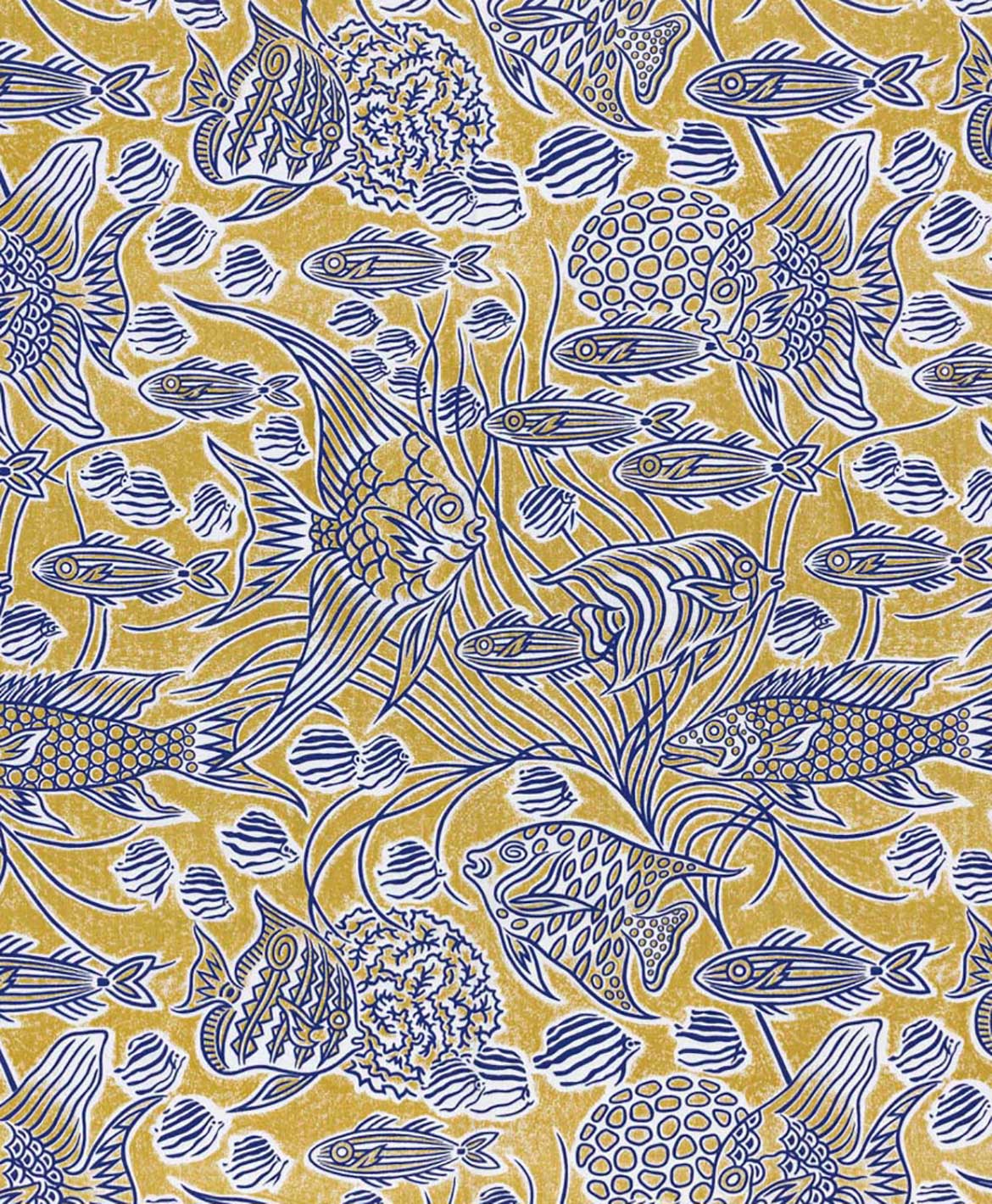
I’m particularly fond of print shirts from Queensland designer Olive Ashworth. While News South Wales and Victoria have always been known to be the more populated, more up-with-the-times locations of the great southern land, Queensland’s tropical climate and Great Barrier Reef was a source of inspiration to the designer throughout her career.

As she was crafting the visually iconic landscape; Ashworth also became more stylised in the 1980s, fitting with Australia’s kitsch approach to fashion.

Olive Ashworth / Reef rhythm / 1971 / Collection: Queensland Art Gallery

I personally love the similarly bright designs, now known as dad shirts, returning in the everyday sense of fashion.

Trends We Are Seeing Again: The Hair Edition

Mullets

Two men wearing mullets.
Double mullets / 2019 / Fred Hooper / ABC News

Now, no one can write a post about recurring fashion trends in Australia and not mention mullets. The ‘business in the front, party in the back’ hairstyle was popular among men in the ’80s is now looked upon as a “protest of conventional beauty” by some, and as a timeless statement by others.

If mullets aren’t your thing, the looser version of the spiral perm has also been making a comeback – though it is slightly more difficult to come by due to the specificity of the process.

Scrunchies

Dinner Scrunchie / mykitsch.com

Speaking of hair, I think it’s important to give scrunchies a shout out. Though scrunchies are not exclusives to Australia; this fairly innocuous accessory was an easy way to compliment an outfit and could be made out of a variety of materials. Luckily for us, it seems to be back in a big way all over the world.

Of course, modern fashion trends are much easier to track with the help of social media, with fashion becoming far less localised to specific countries.

We can now see what people are wearing all over the world almost instantly, and copy our favourite styles. As the boundaries of gender, culture, and style blend, it was inevitable that we would start recreating looks from years passed.

So what trends do want to return? And what are some trends you’d rather forget? Leave a comment below!

This post is part of a series, check out my other posts tagged ‘australiasfashionhistory’ to read more.